Delay
Library for delay processing.
Available Functions
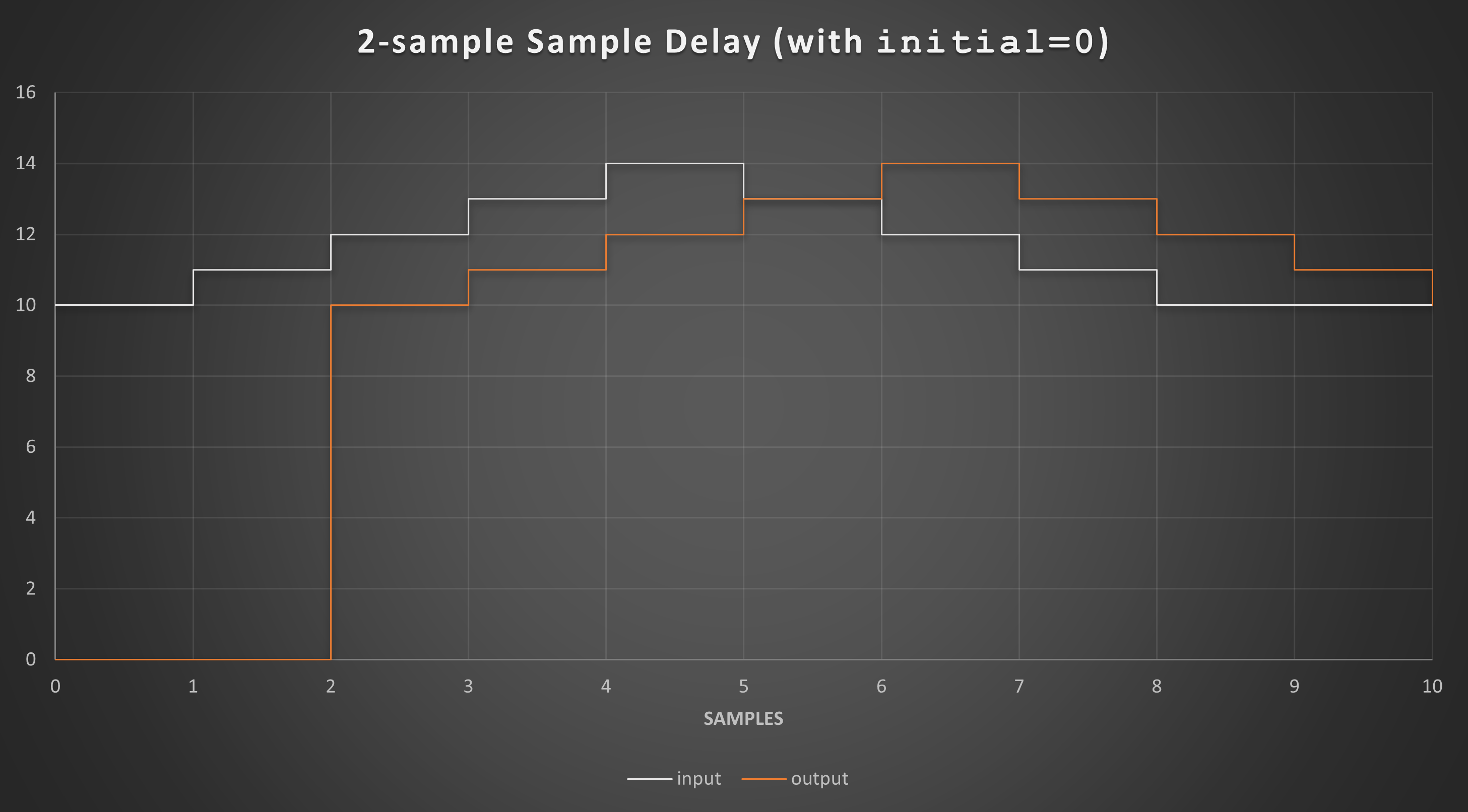
samples(signal, delay, initial)
Delay a signal by some amount of “samples”
Usage
core.delay.samples(signal, delay);
core.delay.samples(signal, delay, initial);
Arguments
- signal
- [any] raw value
- delay
- [number] number of samples to delay the output
- initial
- [any] (optional) value to use for the first
delayseconds (defaults to first received value)
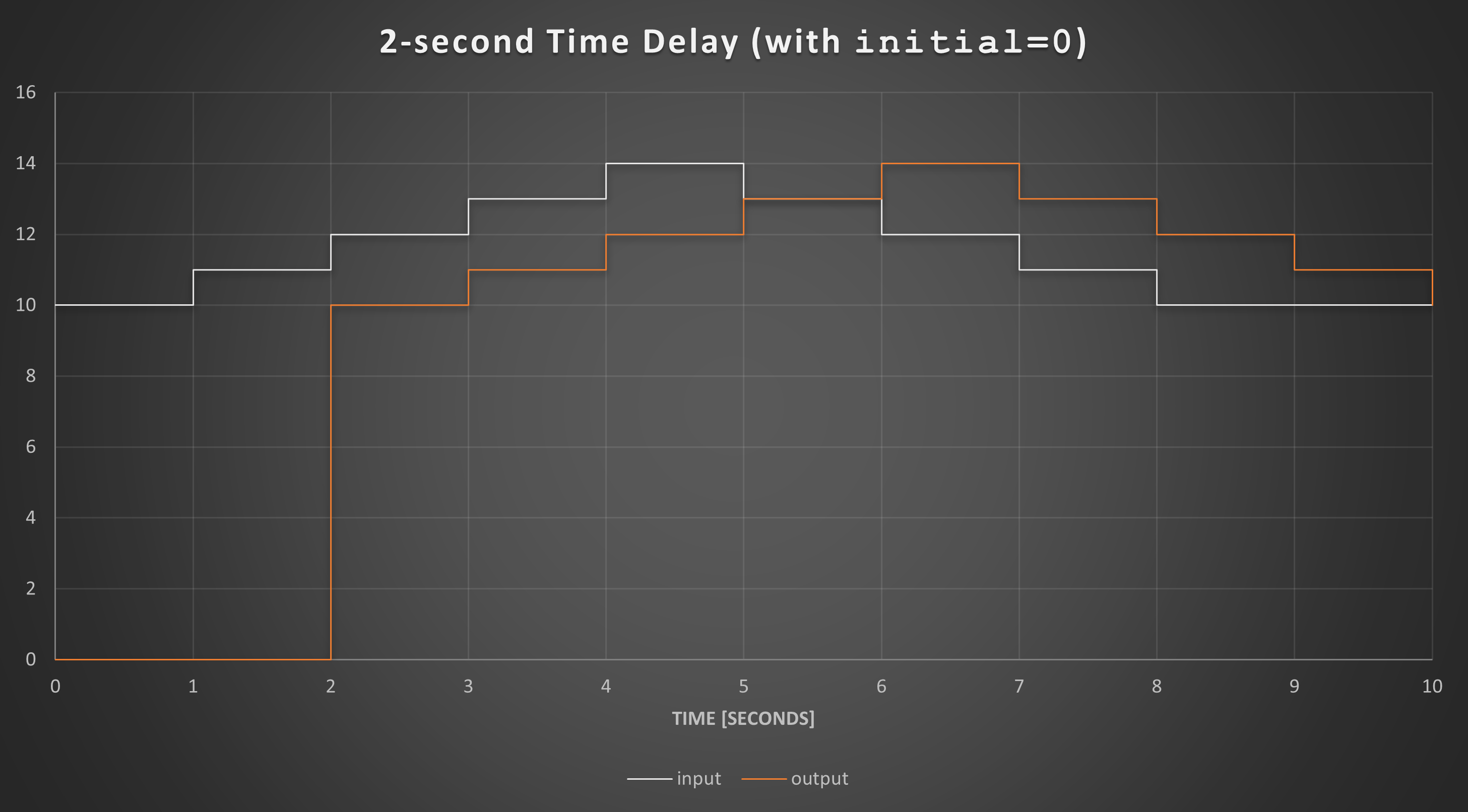
time(signal, delay, initial)
Delay a signal by some amount of time
Usage
core.delay.time(signal, delay);
core.delay.time(signal, delay, initial);
Arguments
- signal
- [any] raw value
- delay
- [number] time, in seconds, to delay the output
- initial
- [any] (optional) value to use for the first
delayseconds (defaults to first received value)
timeToTrue(signal, delay)
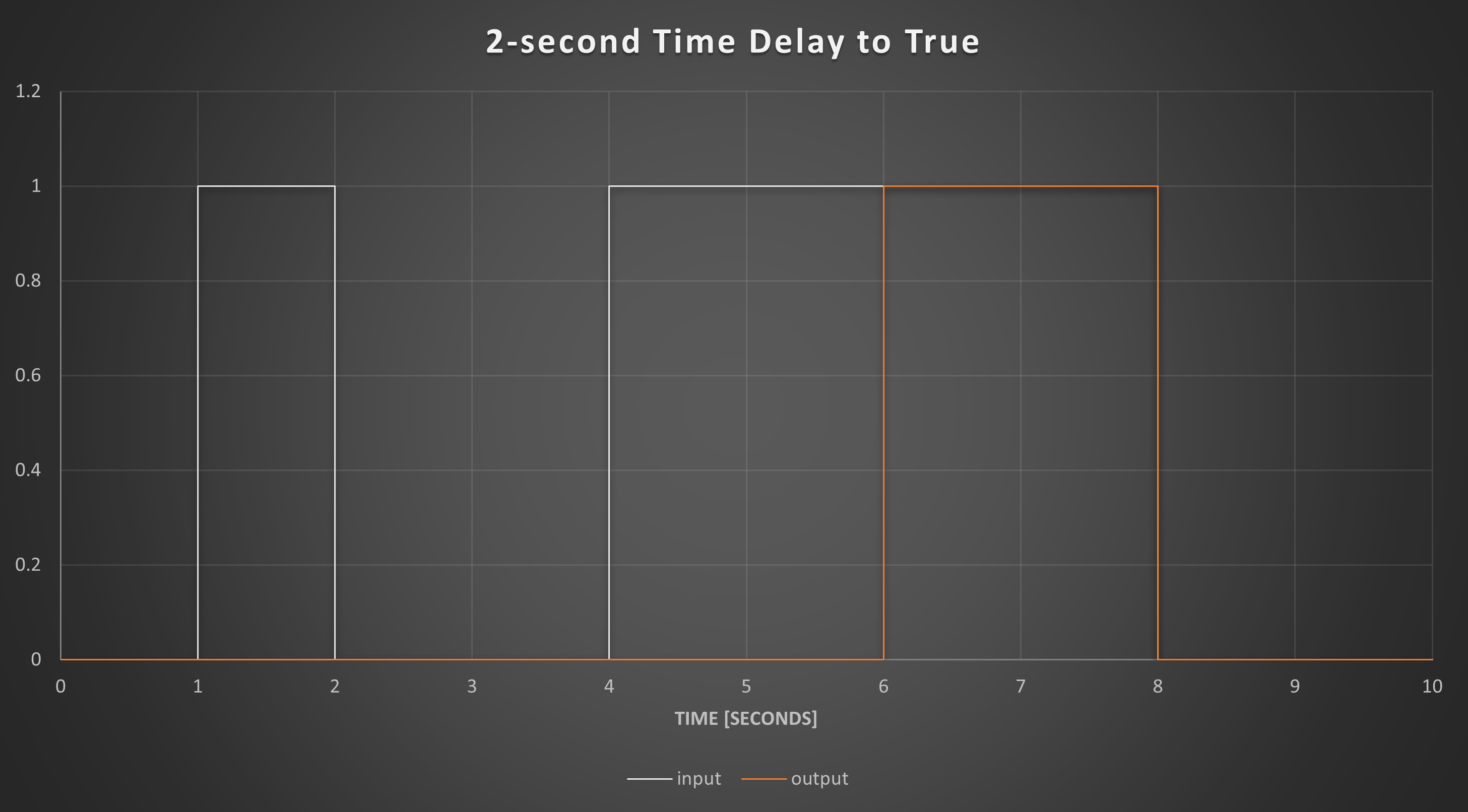
Delay the rising edge of a signal for delay seconds. Falling edges are passed through without delay. The output takes the value of the input after delay seconds from the last rising edge. So if the input is false at delay seconds, the output stays false.
Usage
core.delay.timeToTrue(signal, delay);
Arguments
- signal
- [boolean] raw value
- delay
- [number] time, in seconds, to delay the output rising edge
timeToFalse(signal, delay)
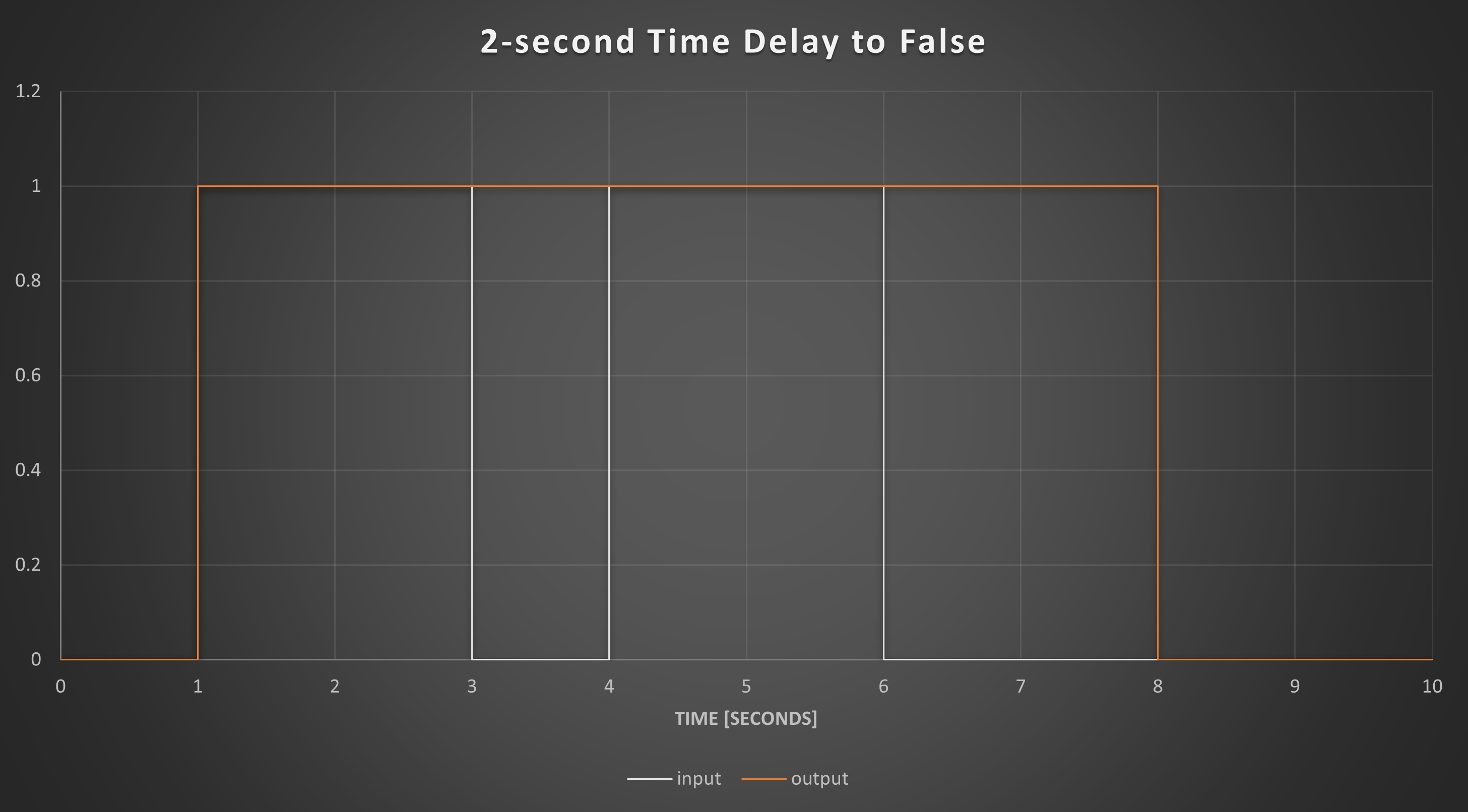
Delay the falling edge of a signal for delay seconds. Rising edges are passed through without delay. The output takes the value of the input after delay seconds from the last rising edge. So if the input is true at delay seconds, the output stays true.
Usage
core.delay.timeToFalse(signal, delay);
Arguments
- signal
- [boolean] raw value
- delay
- [number] time, in seconds, to delay the output falling edge
Last modified October 3, 2025: Consolidated Scripting, added Flow Example, and Fixed Typo (c4b0ec3)