Thing Type Synchronizing
Thing Types definitions are stored in both ServiceNow and the IoT Cloud. You can update and Save them to ServiceNow, and choose when to “Push” them to the cloud. The “Last Modified” and “Last Synchronized” Dates help you to track their status.
Import New Thing Types…
From the main Thing Types screen, you can select the Import action to Import Thing Types from either the IoT Cloud or a local file into ServiceNow. There are two tabs, Remote Configurations and Upload File.
Remote Configurations
Note
This import brings the full details of the selected thing types and their dependencies stored on the IoT Cloud.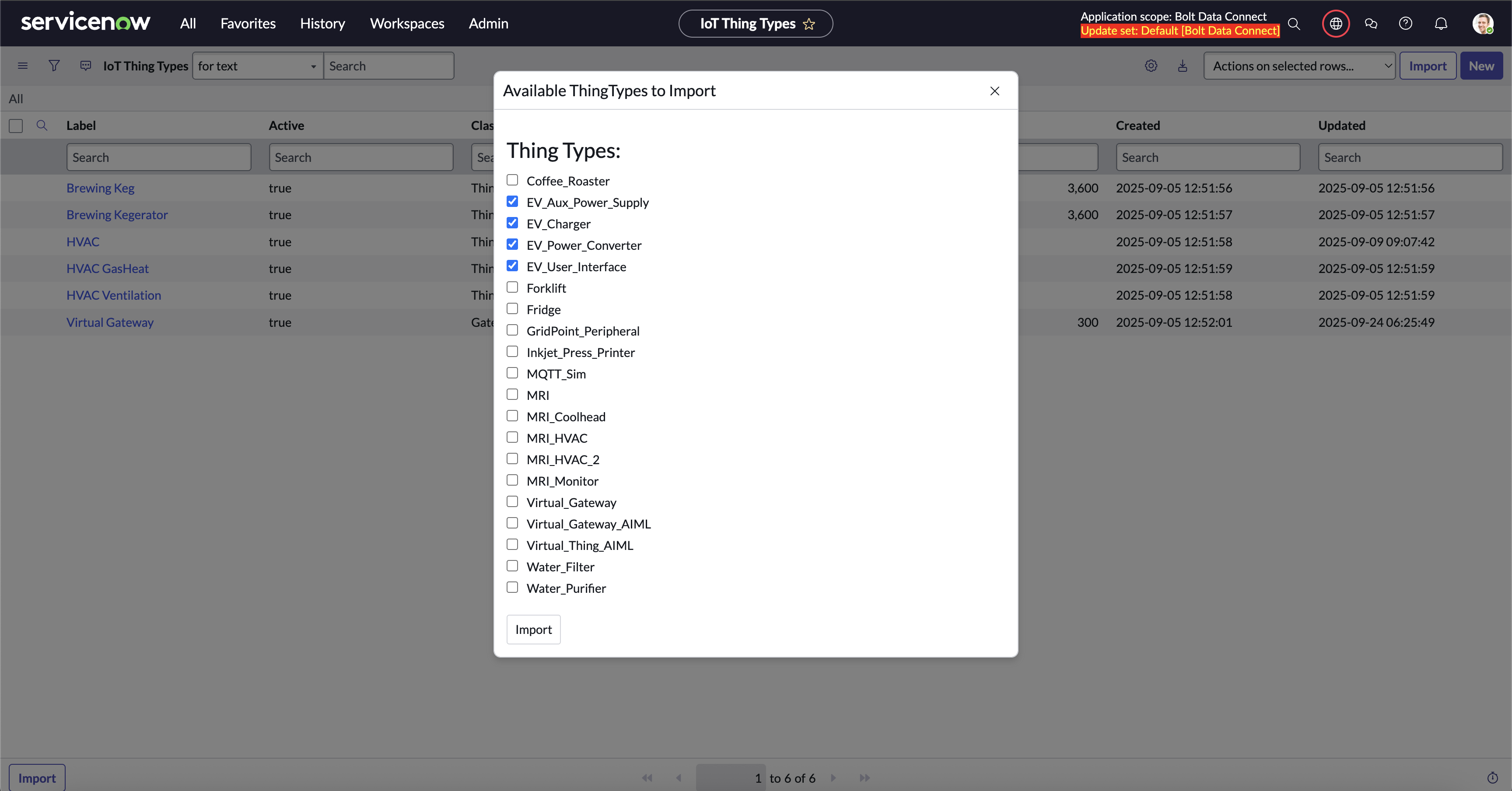
Thing Types Import
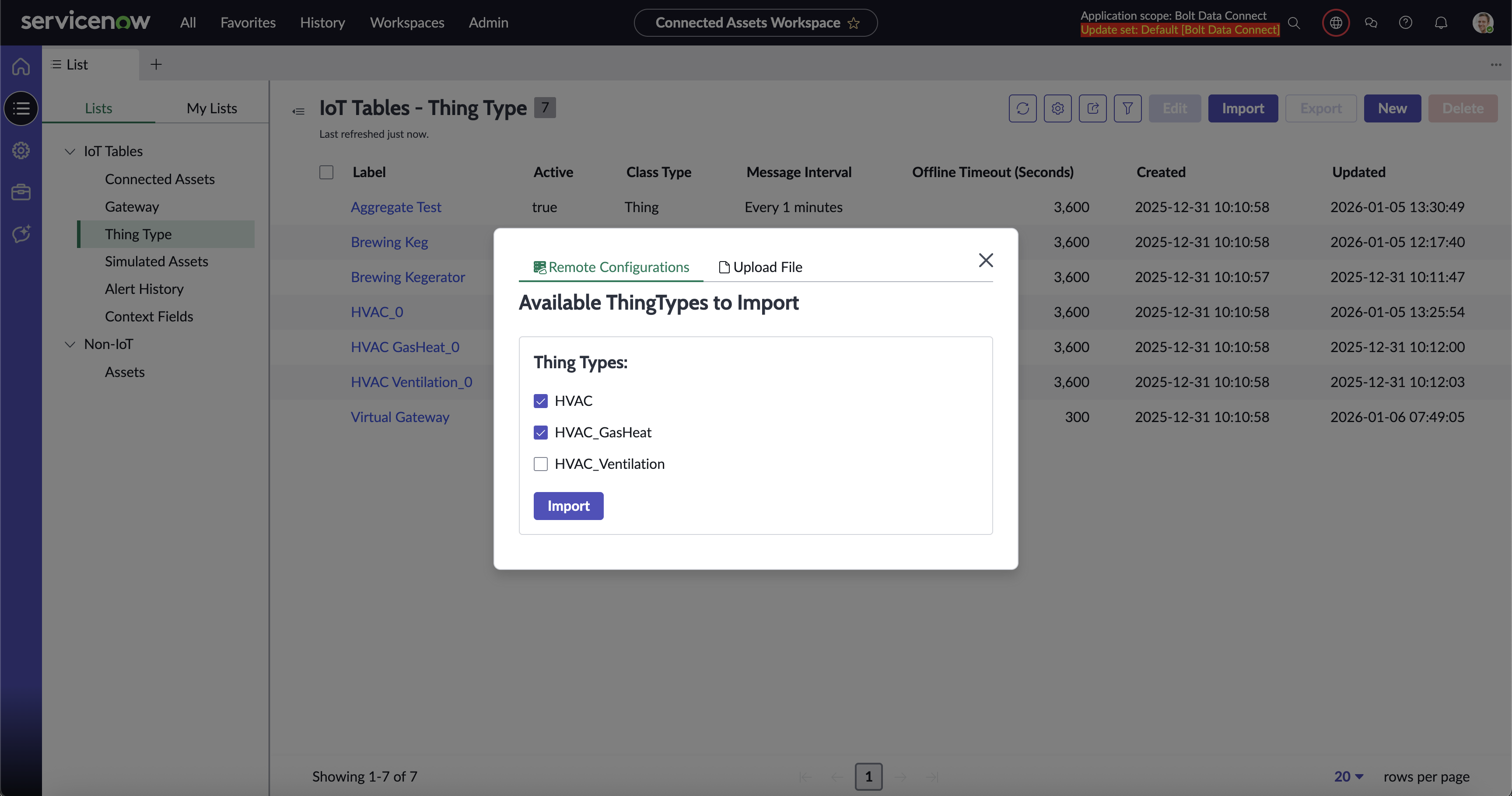
Thing Types Workspace Import
Upload File
Select a file saved using the Export action to import all of the thing types and their dependencies.
Note
This import brings the full details of the selected thing types and their dependencies stored on the local file.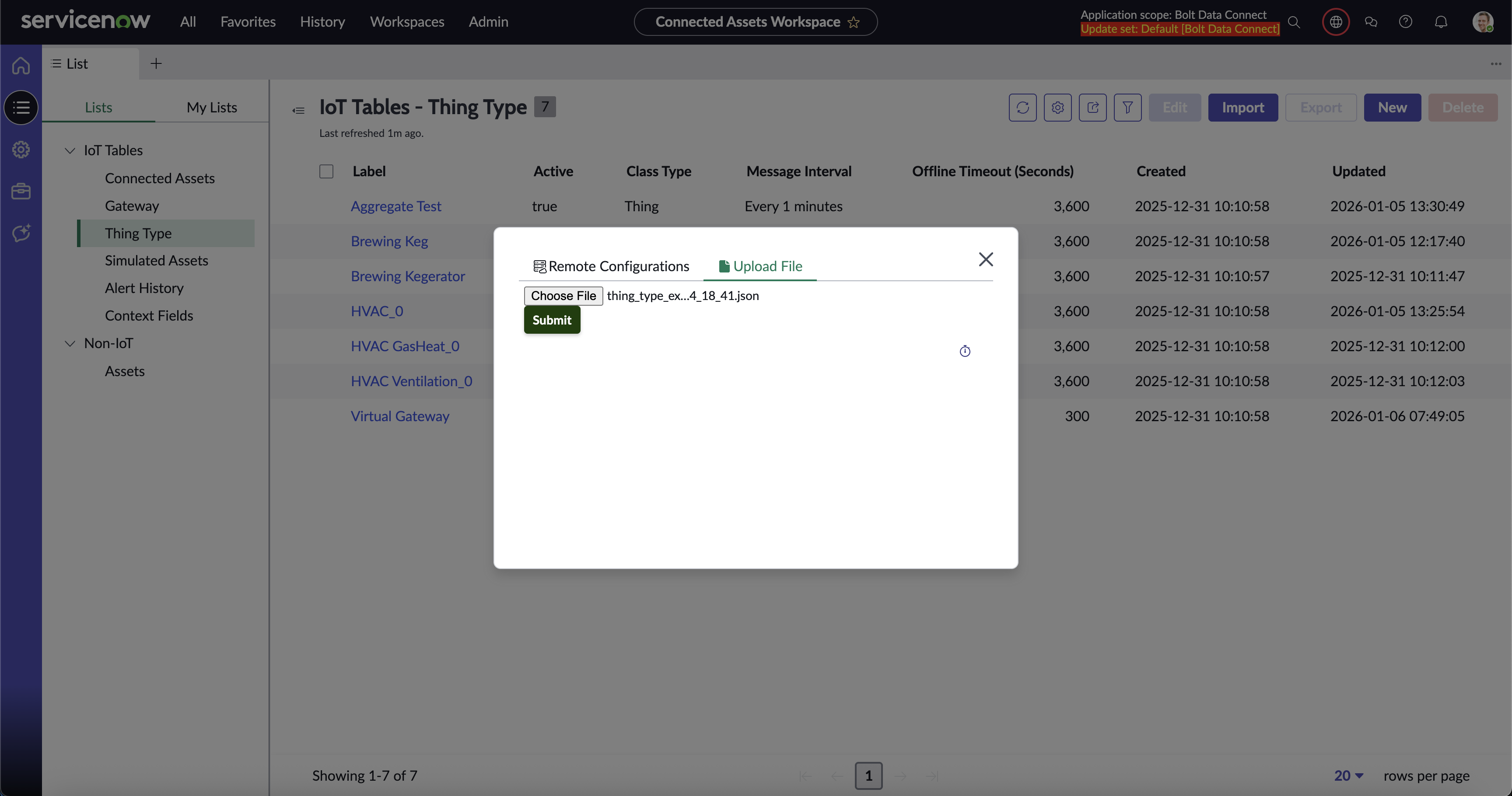
Upload Thing Types
Export Thing Types
From the main Thing Types list page in the workspace, you can select thing types and click the Export action to save your thing types configurations to a local file. This file can be used to backup and move changes between instances.
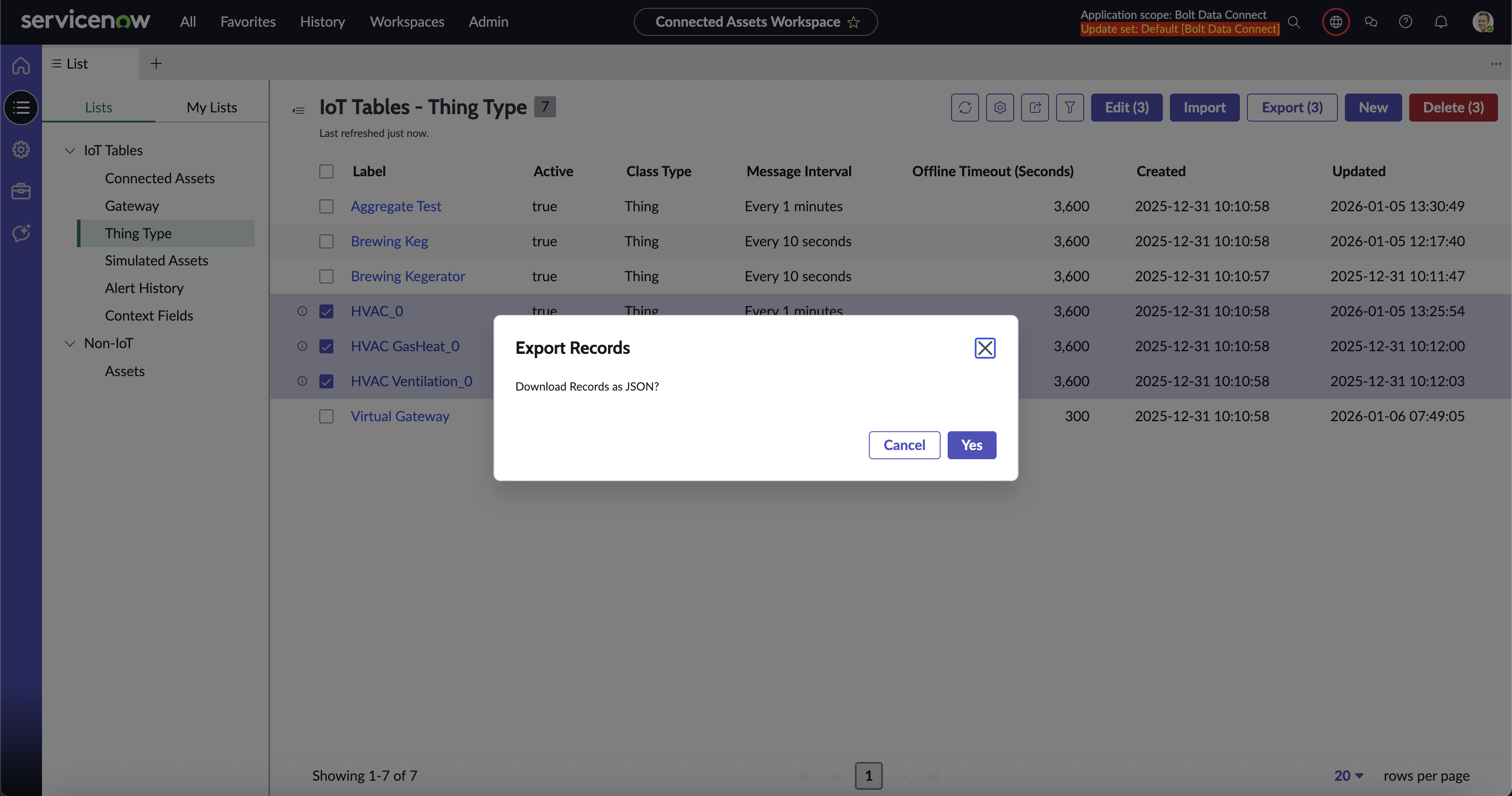
Export Thing Types
Sync
Sync ∇ (Pull from the IoT Cloud)
When Editing a Thing Type, you can choose to Sync the full definition from the IoT Cloud into ServiceNow. This would typically be used if the Thing Type has been edited and you wish to rollback, or if you are setting up a new ServiceNow Instance but reusing a IoT Cloud org.
Sync Δ (Push to the IoT Cloud)
To deploy the latest Thing Type definition to the IoT Cloud (and the Edge Gateways), simply Sync the Thing Type.
Audit Trail (From the IoT Cloud)
To view the history of a Thing Type definition in the IoT Cloud, use the View History UI Action to view the Audit Trail.
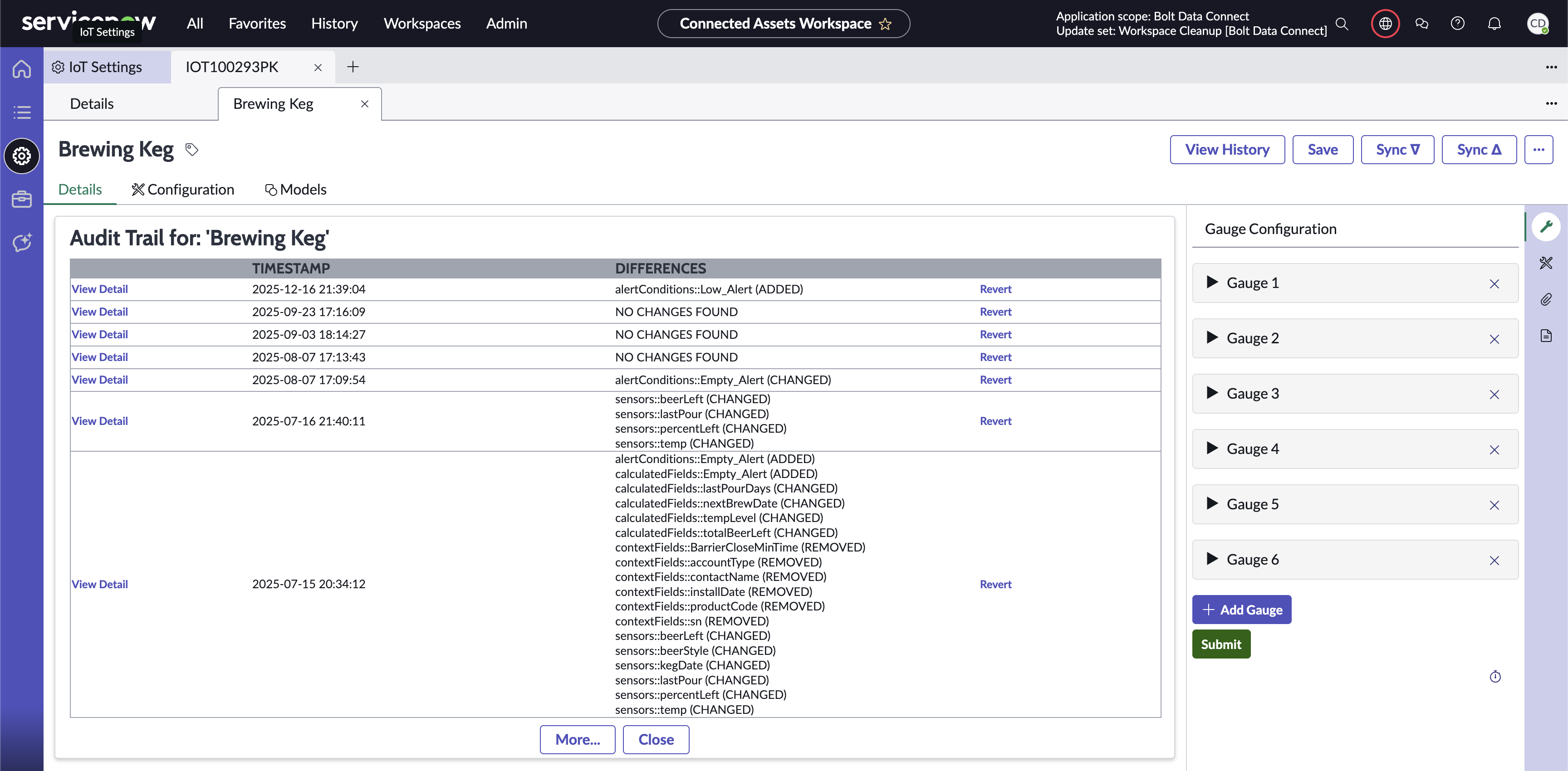
Thing Type Audit Trail
Note
- The View Detail button shows the detailed content behind each change
- The Revert button will replace the Thing Type editor with the previous values. After reviewing the changes the user can then Save and Sync as they wish. This will not delete any records, including sensors, digital twin roles, alert conditions, calculated fields, context fields, ml models, and model interfaces. These records need to be deleted manually through any supported method in ServiceNow.